


Is Organic Cotton More Breathable Than Regular Cotton?
Table of Contents
- Is Organic Cotton More Breathable Than Regular Cotton?
- What Makes Fabric Breathable in Warm Weather
- The Most Breathable Cotton Fabric Options
- Frequently Asked Questions
Last Updated: October 4, 2026
Is Organic Cotton More Breathable Than Regular Cotton?
The difference between organic and regular cotton comes down to growing practices, not breathability. Both are the same natural fiber, and whether one breathes better depends on fabric construction, weave, weight, and yarn thickness, not whether it's grown organically.
At Lotus Temple Collection, we use 100% organic cotton for sustainable, ethical sourcing. Organic certification guarantees cleaner growing practices and fewer synthetic pesticides, but not greater breathability.
Whether is organic cotton more breathable than regular cotton depends on fabric structure, not fiber origin. A loosely woven organic cotton voile breathes better than tightly woven conventional cotton canvas, weave matters more than the label.
| Breathability Factor | What Determines It | Organic vs. Conventional Impact |
|---|---|---|
| Air circulation | Weave type and yarn weight | Minimal difference |
| Moisture absorption | Fiber properties (both absorb equally) | Minimal difference |
| Drying speed | Fabric weight and thickness | Minimal difference |
| Comfort in heat | Weave looseness and air permeability | Minimal difference |
What Makes Fabric Breathable in Warm Weather
Breathability comes from weave tightness, not fiber origin. Loosely woven fabric allows air circulation; tightly woven fabric traps heat, equally true for organic and conventional cotton.
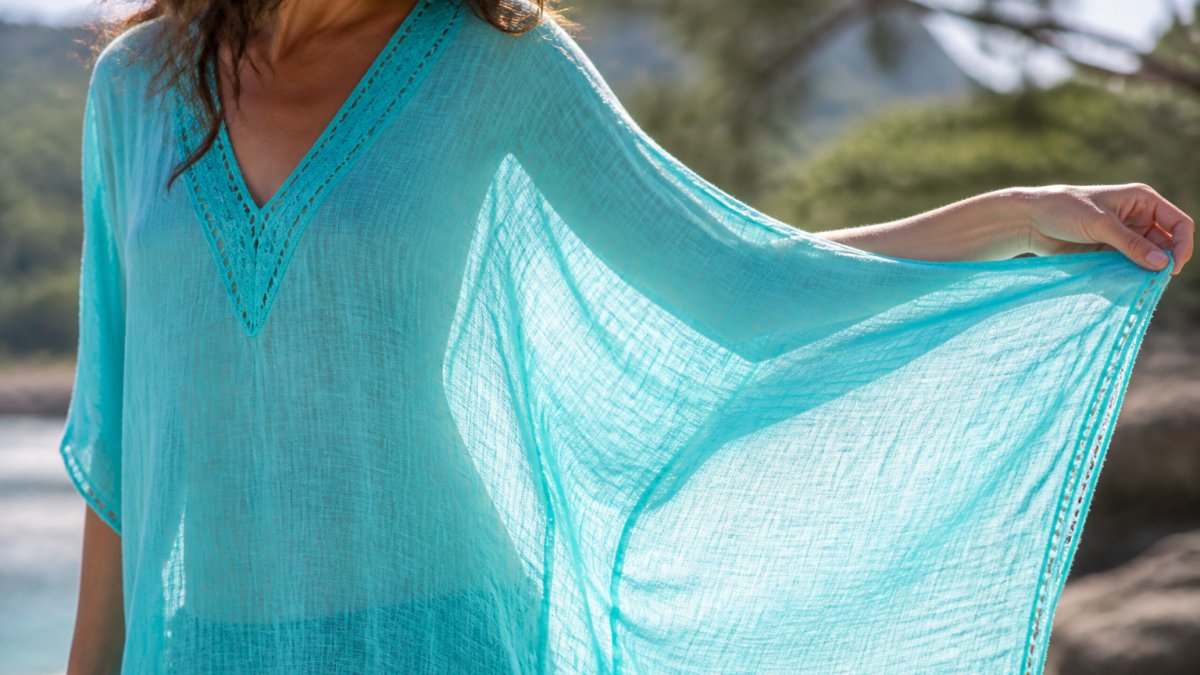
The most breathable cotton fabrics are muslin, voile, and poplin, available in both organic and conventional varieties. Voile uses fine spun yarns loosely woven for maximum air circulation. Cotton's hollow core structure aids moisture absorption in all cotton, organic or not.
Fabric weight determines breathability: lightweight fabrics outperform heavy ones regardless of organic certification.
The Most Breathable Cotton Fabric Options
When shopping for breathable cotton, focus on weave type and weight, not the organic label. Muslin, voile, and poplin excel in warm climates.
Voile is lightest and most transparent for maximum airflow. Muslin offers softer feel with more structure. Poplin balances durability and breathability.
100% Organic Cotton Handloom Shawl →
Our Turquoise Tunic Top Hand Embroidered uses 100% cotton voile weave with fine spun yarns and loose weave for hot weather. Hand embroidery adds artisan detail without compromising breathability.

Our Hand loom Shawl 100% Organic Cotton uses fine organic cotton with intentional transparency. Hand-loom construction creates natural weave variation that enhances airflow.

The honest answer: is organic cotton more breathable than regular cotton? No. But choosing lightweight, loosely woven cotton, whether organic or conventional, absolutely will keep you cooler in warm weather. Pay attention to fabric construction, not just the organic label.
Frequently Asked Questions
Is organic cotton more breathable than regular cotton?
Breathability depends on weave, weight, and yarn thickness, not certification. A loosely woven conventional cotton voile breathes better than tightly woven organic cotton. Organic farming practices support soil health and reduce synthetic pesticides, but those factors don't directly change the fiber's breathability. The hollow core structure of cotton fiber itself, regardless of how it's grown, absorbs moisture and allows air circulation. Choose based on weave and weight first; certification is a separate sustainability choice.
What makes fabric breathable?
Breathability comes from loose weave construction, lightweight fabric weight, and fiber properties that absorb moisture. Cotton's hollow core naturally wicks sweat away from skin and releases it into the air. Fabrics like voile, muslin, and loosely woven poplin have larger gaps between yarns, allowing more air circulation. Fine-spun yarns create thinner, more transparent fabrics that breathe better than heavy, tightly woven constructions. Handloom techniques often produce naturally breathable fabrics because the weave is less compressed than industrial processes.
What's the best cotton fabric for hot weather?
Voile, muslin, and fine handloom cotton are ideal for warm climates. These fabrics use lightweight, loosely woven construction that maximizes air circulation and moisture absorption. Voile is sheer and extremely light; muslin offers a balance of breathability and durability. Handloom shawls and tunics made from fine organic cotton, like those from Lotus Temple Collection, combine traditional weaving techniques with breathable construction, the Hand Loom Shawl 100% Organic Cotton ($138) is generously sized for use as a beach wrap or sarong. Look for fabric weight under 150 grams per square meter and transparent or semi-transparent weaves.
Breathable cotton is essential for comfort in warm climates, but the breathability comes from weave and weight, not certification. Lotus Temple Collection pieces are crafted from 100% organic cotton using traditional handloom and voile weave techniques that prioritize airflow and comfort. Explore our collection of hand-embroidered tunics and artisan shawls designed for tropical vacations, spiritual retreats, and hot-weather wear.