


Breathable vs Moisture-Wicking Fabrics Explained
Table of Contents
- Breathable vs Moisture-Wicking Fabrics: Core Differences
- Best Natural Fabrics for Hot Weather
- How to Choose Clothing for Tropical Climates
- Frequently Asked Questions
Last Updated: October 2, 2026
Breathable vs Moisture-Wicking Fabrics: Core Differences
Breathable vs moisture wicking fabrics explained: they are often confused, though they describe distinct properties affecting performance in heat and humidity.
Breathability refers to a fabric's ability to allow air to pass through it via open weave or structure, helping heat escape from your body.
Moisture-wicking describes a fabric's ability to pull sweat away from your skin and move it to the outer surface where it can evaporate through capillary action.
Breathability is about air movement; moisture-wicking is about sweat transport. Cotton is highly breathable but absorbs sweat, while synthetics like polyester wick moisture while maintaining breathability.
Best Natural Fabrics for Hot Weather
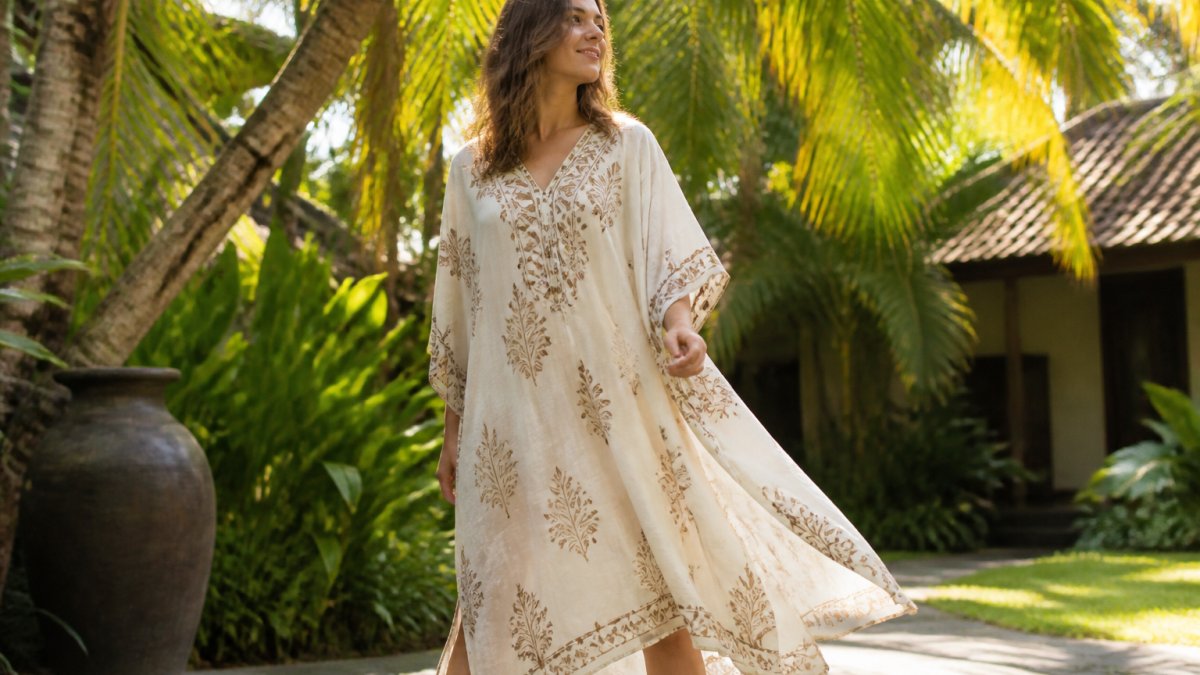
100% cotton offers exceptional breathability through its hollow core structure, allowing sweat to evaporate rather than pool against skin, ideal for tropical vacations and spiritual retreats.
Lotus Temple Collection prioritizes natural fabrics for genuine comfort, offering hand block-printed kaftans and resort sundresses in 100% cotton with Fair Trade Certified organic cotton options.

How to Choose Clothing for Tropical Climates
Select clothing for hot, humid environments by prioritizing 100% natural fibers; 100% cotton performs better than 70% cotton blends.
Choose loose, flowing designs like kaftans and tunics to maximize air circulation.
Hand Embroidered Stretch Leggins Yoga Pant White →
Layer lightweight cotton tunics with bamboo viscose or organic cotton leggings for yoga retreats.
| Fabric Type | Breathability | Moisture-Wicking | Best For | Care |
|---|---|---|---|---|
| 100% Cotton | Excellent | Moderate | Beach, retreats, casual wear | Machine wash cold, tumble dry low |
| Bamboo Viscose | Excellent | Good | Resort wear, yoga, layering | Gentle cycle, air dry recommended |
| Organic Cotton | Excellent | Moderate | Conscious consumers, everyday wear | Machine wash cold, eco-friendly detergent |
| Linen | Excellent | Good | Hot climates, formal resort wear | Hand wash or gentle cycle |
Hand block-printed pieces are versatile investment pieces for tropical travel.
The best tropical clothing combines the principles of breathable vs moisture wicking fabrics explained through natural fabrics like organic cotton. Lotus Temple Collection's hand block-printed kaftans, resort sundresses, and organic cotton tunics offer breathable, ethically produced pieces perfect for warm climates and spiritual retreats.
Frequently Asked Questions
Are breathable and moisture-wicking fabrics the same thing?
No. Breathable fabrics allow air to flow through them, reducing heat buildup. Moisture-wicking fabrics actively pull sweat away from your skin and move it toward the fabric's surface for evaporation. A fabric can be breathable without wicking, or vice versa. The best performance apparel combines both properties: air permeability for ventilation and moisture transport to prevent saturation and discomfort.
What are the best natural fabrics for hot weather?
100% cotton is the gold standard for hot climates because of its air permeability and moisture absorption. Organic cotton, like the Fair Trade Certified options in our Stretch Pant Cropped Bootcut Leggings ($79.98), provides comfort with lower environmental impact. These fabrics are ideal for tropical vacations, beach wear, and spiritual retreats.
How does moisture-wicking technology actually work?
Moisture-wicking relies on capillary action, where fibers pull water (sweat) along their structure away from skin. Natural fibers like cotton and bamboo are hydrophilic (water-attracting), absorbing moisture and allowing it to evaporate. The fiber structure determines how efficiently sweat moves and dissipates, keeping you dry and comfortable.
Is 100% cotton breathable for hot, humid weather?
Yes. Cotton has excellent air permeability, allowing ventilation around your body and reducing heat accumulation. However, pure cotton absorbs moisture rather than wicking it away quickly, so it can feel heavy when saturated with sweat in high humidity. For tropical climates, hand block-printed 100% cotton pieces like our Lemon Yellow Tunic Top ($160.00) work beautifully for casual wear and resort settings because they're lightweight and cool against skin, though they may require more frequent changes during intense activity.