


Best Lightweight Fabrics for Tropical Climates
Table of Contents
- Why Breathability Matters in Tropical Climates
- Cotton Voile and Natural Fibers: The Gold Standard
- How to Care for Cotton Resort Wear
- Frequently Asked Questions
Last Updated: September 30, 2026
Why Breathability Matters in Tropical Climates
In tropical climates, the best lightweight fabrics for tropical climates prioritize airflow and moisture-wicking; natural fibers' open weaves allow sweat to evaporate instead of pooling on your skin.
Cotton Voile and Natural Fibers: The Gold Standard
Cotton voile is the gold standard for tropical climates, with an open weave that maximizes airflow and releases moisture quickly.
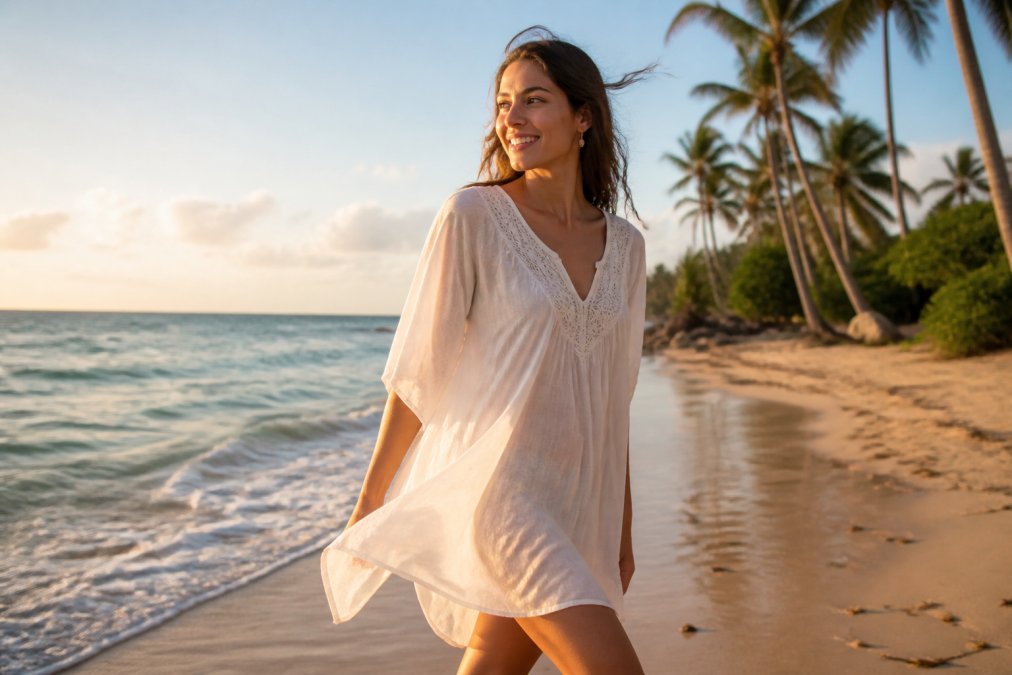
The Turquoise Tunic Top Hand Embroidered from Lotus Temple Collection ($168.00) features 100% cotton voile with hand-embroidered paisley neckline and side slits for ventilation. Natural fibers absorb moisture without feeling damp and resist odor buildup, unlike synthetic blends.

| Fabric Type | Breathability | Moisture-Wicking | Best For | Care |
|---|---|---|---|---|
| Cotton Voile | Excellent | Excellent | Beach, resort wear | Hand wash cold, hang dry |
| Cotton Cambric | Very Good | Very Good | Sundresses, structured pieces | Machine wash gentle |
| Linen Blends | Excellent | Good | Workwear, formal wear | Hand wash or gentle machine |
| Rayon | Good | Excellent | Lightweight dresses | Hand wash cold |
| Synthetic Blends | Poor | Poor | Avoid in humidity | Machine wash |
How to Care for Cotton Resort Wear
Hand wash cotton pieces in cold water with mild detergent and hang dry to preserve breathability; hand-embroidered and block-printed pieces require extra care with gentle agitation and air drying.
The Organic 100% Cotton Indigo Lotus Flower Anokhi Hand Block Print Kaftan ($185.00) becomes softer with wear and works for lounging, beach wear, or hosting.
Turquoise Tunic Top Hand Embroidered →

Choosing the best lightweight fabrics for tropical climates comes down to prioritizing natural fibers with open weaves. Cotton voile, cambric, and other breathable constructions keep you cool while resisting odor and moisture buildup. Lotus Temple Collection's hand-embroidered tunics and block-printed kaftans deliver both style and performance, pieces that work for beach days, spiritual retreats, and casual entertaining without compromising comfort in humidity. [EXTERNAL_LINK: Invest in pieces designed for tropical wear, care for them properly with cold-water hand washing, and they'll serve you for years across multiple vacations and seasons.
Frequently Asked Questions
What is the best fabric to wear in humid weather?
Cotton voile is the best choice for humid climates. Its open weave structure allows air to circulate freely against your skin, enabling sweat to evaporate quickly rather than clinging to your body. Natural fibers like cotton absorb moisture while maintaining breathability, unlike synthetic blends that trap heat.
Why is organic cotton preferred for tropical vacations?
Organic cotton offers superior breathability without chemical residues that can irritate skin in heat and humidity. It absorbs moisture efficiently, dries quickly, and maintains its softness through repeated washing. Many pieces like Lotus Temple Collection's hand-embroidered tunics use 100% organic cotton voile, which provides the lightweight comfort needed for resort wear while supporting sustainable farming practices that protect water resources.
How do I care for cotton resort wear to maintain breathability?
Hand wash cotton resort wear in cold water and hang dry to preserve the fabric's open weave structure. Machine washing and tumble drying can compress fibers and reduce breathability over time. Avoid fabric softeners, which coat the fibers and block moisture-wicking. Air drying in sunlight naturally refreshes the fabric and helps maintain its lightweight feel, keeping your pieces comfortable for years of tropical travel.
What fabrics should I avoid wearing in hot weather?
Avoid heavy synthetic blends, polyester-dominant fabrics, and tightly woven materials like denim or canvas. These trap heat and moisture against your skin, preventing evaporation and causing discomfort. Also skip fabrics treated with water-resistant coatings or dense knits, they block airflow. Lightweight natural fibers with open weaves perform far better in tropical heat than synthetic alternatives, which can feel clammy and restrict air circulation.