


7 Benefits of Organic Cotton for Sensitive Skin
Table of Contents
- 1. Fewer Chemical Residues Protect the Skin Barrier
- 2. Is 100 Percent Cotton Breathable? Yes, and Here's Why It Matters
- 3. How to Identify Sustainable Fabrics and Certified Organic Cotton
- Frequently Asked Questions
Last Updated: September 19, 2026
1. Fewer Chemical Residues Protect the Skin Barrier
Organic cotton is grown without synthetic pesticides or toxic fertilizers, so the finished fabric carries far fewer chemical residues than conventional cotton, fewer irritants and a calmer skin barrier for sensitive skin.
Conventional cotton farming relies heavily on synthetic pesticides, and USDA organic regulations prohibit those inputs in certified organic production. Because raw cotton is processed into fabric, residues from farming can carry through textile processing. Organic certification rules restrict which substances may be used, which is why dermatologists often steer reactive skin toward certified organic cotton.
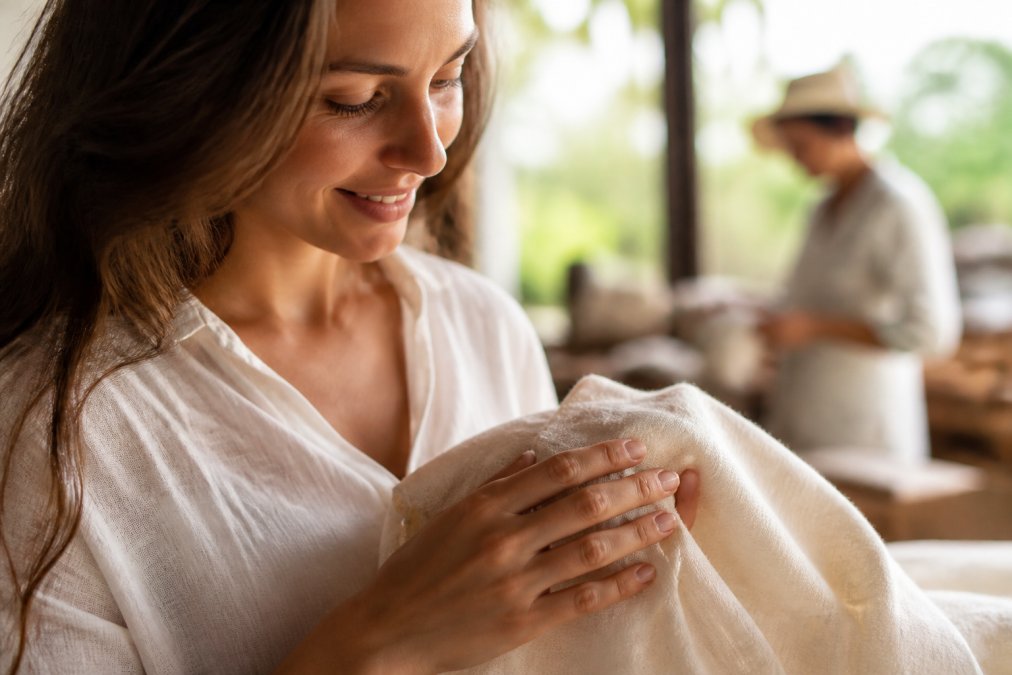
Fewer residues mean less chance of flare-ups for dermatitis or eczema-prone skin.
2. Is 100 Percent Cotton Breathable? Yes, and Here's Why It Matters
Yes, 100 percent cotton is breathable. Cotton fibers let air pass through the weave, helping heat escape and keeping skin cooler in humid conditions.
Breathability is a big reason organic cotton suits sensitive skin: when fabric traps heat and sweat, moisture sits against the skin and triggers irritation, while cotton's fibers pull sweat away.
A breathable cotton tunic or kaftan lets air circulate on a hot day without the cling of synthetics, ideal for beach cover-ups, resort wear, and retreat clothing in tropical climates.
3. How to Identify Sustainable Fabrics and Certified Organic Cotton
Identifying genuine sustainable fabrics starts with certification, not marketing copy. Look for third-party organic certification before trusting any "organic" claim.
GOTS (Global Organic Textile Standard) and Oeko-Tex are the two certifications worth knowing. GOTS verifies organic fiber content and processing standards across the supply chain; Oeko-Tex tests for harmful substances in the finished textile, together covering fiber purity and chemical safety.
To tell certified organic cotton from a vague claim: check for a certification logo or license number, confirm the fiber content says "organic cotton" rather than just "cotton," look for GOTS or Oeko-Tex references, and be skeptical of "chemical-free" claims with no certification.
For care, hand wash organic cotton in cold water and avoid harsh detergents, gentle washing protects fiber integrity and keeps residues off the fabric, especially for dust mite sensitivities.
At Lotus Temple Collection, our hand block-printed kaftans and handloom shawls are made with organic and sustainably sourced materials. Our Organic 100% Cotton Indigo Lotus Flower Anokhi Hand Block Print Kaftan pairs breathable cotton with artisan detail for warm-weather comfort.

Frequently Asked Questions
Why is organic cotton better for people with eczema or skin sensitivities?
Organic cotton is grown without synthetic pesticides or toxic fertilizers, so it carries far fewer chemical residues that can trigger irritation. Its natural fibers are soft, breathable, and moisture-wicking, which helps keep the skin barrier dry and calm. For people with eczema or dermatitis, reducing exposure to potential irritants in clothing is a practical step toward fewer flare-ups.
How can you tell if clothing is truly organic cotton?
Look for third-party certifications like GOTS or Oeko-Tex on the label. These verify that the fiber meets organic farming and processing standards. You can also check the brand's website for transparency about their supply chain. If a product claims organic without any certification, treat the claim with caution until you can verify it.
Does organic cotton still have chemicals?
Organic cotton can still go through textile processing like dyeing, but it avoids the synthetic pesticides, fertilizers, and harsh chemical finishes used in conventional cotton. Choosing low-impact dyes and certified organic fabrics reduces your exposure to chemical residues that may irritate sensitive skin. No textile is 100 percent chemical-free, but organic cotton significantly lowers the load.
Sensitive skin asks a lot of your wardrobe, and the fabric you choose either helps or hinders it. Lotus Temple Collection makes that choice easier with organic cotton kaftans, shawls, and tunics that are breathable, soft, and made with respect for everyone who touches them. Explore the collection and find pieces that feel as good on reactive skin as they look.