


Why Sustainable Fashion Matters for Travel
Table of Contents
- Why Sustainable Fashion Matters for Travel
- Build a Capsule Wardrobe for Travel
- Benefits of Organic Cotton Clothing
- Care and Maintenance While Traveling
- Sustainable Gear vs. Fashion
- The Environmental Case, in Plain Terms
- A Wardrobe That Travels Well
- Frequently Asked Questions
Last Updated: September 23, 2026
Why Sustainable Fashion Matters for Travel
Sustainable fashion is clothing designed, produced, and worn in ways that reduce environmental harm and respect the people who make it. For travelers, that definition carries extra weight: the clothes you pack are the clothes you live in for a week or two straight, often in heat and humidity, often washed in a hotel sink. According to the EPA's textile waste research, textile waste remains one of the fastest-growing categories in municipal landfills, and travel is one of the few moments when most of us think hard about what we actually need to wear.
Build a Capsule Wardrobe for Travel
A capsule wardrobe for travel is a small, coordinated set of garments that mix and match to cover every activity on your trip. Each piece should work for at least two situations, so a carry-on can cover a beach day, a dinner, and a retreat session without a wasted item.
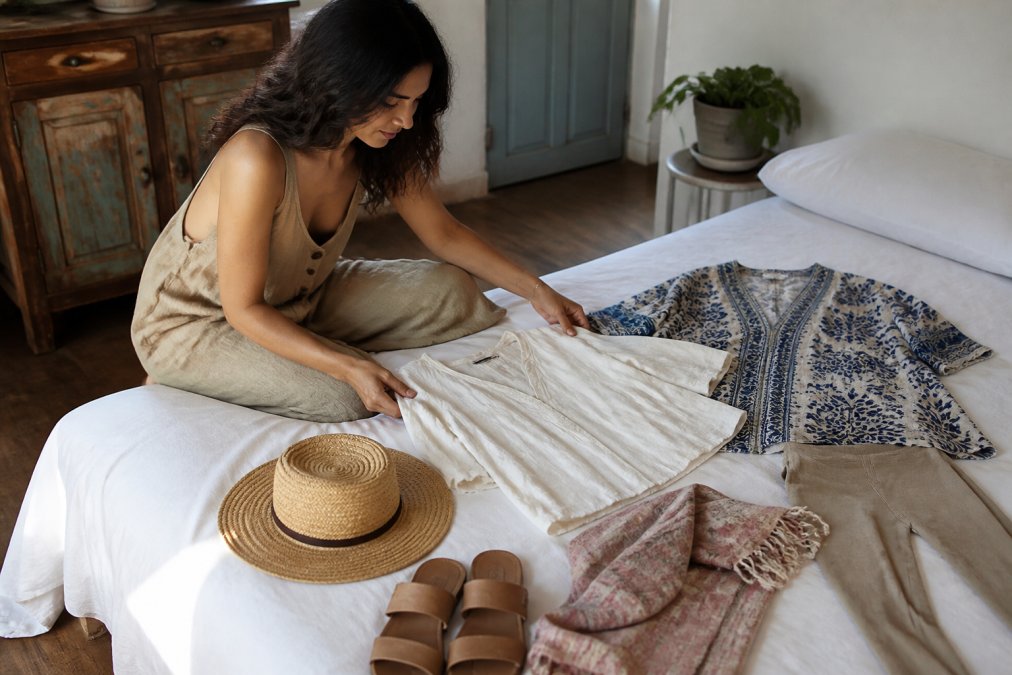
How to pack light sustainably:
- Choose a two-color base. One neutral (white, cream, navy) and one accent; every piece must work with both.
- Start with three tops. A tunic, a kaftan, and a simple tee cover beach, dinner, and casual wear.
- Add two bottoms. One legging or pant, one skirt or loose trouser.
- Bring one layer. A lightweight shawl doubles as a beach cover-up and an evening layer.
- Cap it at eight pieces. If you cannot build ten outfits from eight pieces, remove one and start again.
- Check the fabric, not the label. Natural fibers pack smaller and breathe better than synthetic blends.
Benefits of Organic Cotton Clothing
Organic cotton clothing is made from cotton grown without synthetic pesticides or fertilizers, and it is the single easiest upgrade a traveler can make.
- Breathability. Cotton moves air and absorbs moisture, which matters in humidity. A 100% cotton tunic will not cling the way a synthetic blend does.
- Durability. Dense, well-woven cotton survives repeated washing, including the hotel-sink wash that travel demands.
- Lower water and chemical load. Organic cotton farming uses far less water than conventional cotton and avoids the pesticide runoff that pollutes waterways near conventional farms, as documented by the USDA's organic standards program.
- Ethical labor. Choosing organic and fairly made garments supports fair wages and safer working conditions for the people who grow and sew them.
Care and Maintenance While Traveling
How you care for garments on the road determines whether they survive the trip and the next five.
- Wash cold, by hand. Hot water shrinks cotton and fades hand block-printed dyes; cold water and gentle soap protect both.
- Dry flat, out of direct sun. Harsh sun breaks down fibers and fades prints.
- Roll, do not fold. Rolling reduces creases and saves space when repacking.
- Air between wears. Hanging a garment overnight freshens it, so you wash less often.
- Spot clean first. Treat a stain immediately rather than washing the whole piece.
Sustainable Gear vs. Fashion
Sustainable travel gear and sustainable fashion overlap more than people assume. Gear is built for function, quick-dry, packable, technical, while fashion is built for how it looks and feels. The best travel wardrobe borrows from both.
The Environmental Case, in Plain Terms
Every garment you do not buy is a garment that does not need to be produced, shipped, and eventually discarded. That is the environmental case for sustainable fashion for travel in one sentence. The fashion industry is a significant contributor to global greenhouse gas emissions and water consumption, and overproduction sits at the center of the problem, as the UN Environment Programme's fashion industry analysis explains.
A Wardrobe That Travels Well
The pieces that survive travel are built to be worn hard: breathable cotton, durable construction, and prints that hold their color through a cold wash. That is the standard Lotus Temple Collection builds to. Our hand block-printed kaftans, resort sundresses, and bohemian tunics are made with organic and sustainably sourced materials, and many pieces are 100% cotton, which is why customers wear them far beyond the beach.
Frequently Asked Questions
Why is sustainable fashion important for travel?
Sustainable fashion reduces the environmental impact of tourism by cutting textile waste and carbon footprint. Choosing durable, natural fiber clothing like organic cotton means you pack fewer items that last longer. This lowers the resources needed for production and keeps clothes out of landfills. For travelers, it also means lighter luggage and pieces that work across multiple climates and occasions.
What is the most sustainable way to build a travel wardrobe?
Start with a capsule wardrobe for travel: choose 8-10 versatile pieces in neutral colors that mix and match. Prioritize organic cotton, linen, and hemp over synthetic materials, since natural fibers are biodegradable and breathable. Pick items you can wear multiple ways, like a large shawl that works as a scarf, wrap, or beach sarong. Buy quality over quantity so each piece lasts many trips.
Does organic cotton clothing actually help in tropical climates?
Yes. Organic cotton is breathable and moisture-wicking, so it handles humidity better than synthetic materials. It also avoids the pesticides and fertilizers used in conventional cotton, which reduces water pollution and resource depletion. Look for 100% organic cotton pieces like tunics or kaftans that fit loosely, allowing airflow.
Packing for a trip in heat and humidity is where most wardrobes fail, and it is where a few well-chosen pieces make the biggest difference. Lotus Temple Collection offers artisan-crafted, 100% cotton apparel designed for exactly that: hand block-printed kaftans and tunics that breathe, organic cotton leggings that move, and handloom shawls that do the work of three items. Explore the collection and build a travel wardrobe you will actually wear again when you get home.