


How to Wash Block Print Fabric: A 2026 Guide
Table of Contents
- How to Wash Block Print by Hand: Step-by-Step
- Hand Wash vs Machine Wash Block Print: What to Know
- Best Detergent for Hand-Printed Textiles
- How to Remove Stains from Block Print Without Damage
Last Updated: August 16, 2026
How to Wash Block Print by Hand: Step-by-Step
Knowing how to wash block print fabric correctly is the difference between a piece that lasts years and one that fades after a single season. At Lotus Temple Collection, we craft every hand block-printed piece with natural dyes and organic cotton.

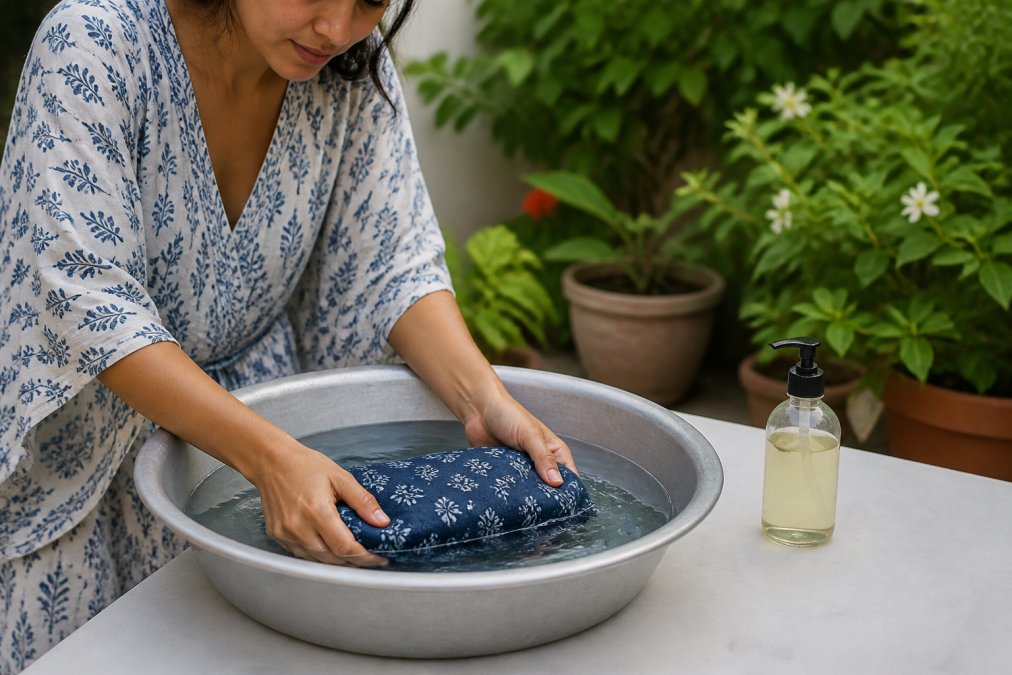
Block print fabric is any textile decorated using hand-carved wooden or metal stamps pressed in natural or plant-based dyes. Because the ink setting is artisanal rather than industrial, the colorfastness is more sensitive to heat, agitation, and harsh chemicals than mass-produced prints.
Follow these steps every time:
- Fill a basin with cold or lukewarm water. Hot water accelerates color bleeding.
- Add a small amount of pH-neutral detergent. A teaspoon is enough for a kaftan or sarong. Swirl gently to dissolve before submerging.
- Turn the garment inside out. This protects the printed surface from friction.
- Submerge and gently press. Do not rub, wring, or scrub. Limit soaking to five minutes maximum.
- Rinse thoroughly with cold water. Squeeze gently, never twist. Repeat until water runs clear.
- Lay flat to dry in the shade. Direct sunlight degrades natural dyes quickly.
Most people skip the inside-out step. Within a few washes, the print surface shows micro-abrasions that dull the design permanently.
Hand Wash vs Machine Wash Block Print: What to Know
Hand washing is always the safest method for block print fabric. Machine washing, even on delicate cycle, introduces mechanical agitation that loosens ink and heat variation that machines cannot control precisely for natural dyes.

If you must machine wash:
- Use the delicate cycle with cold water only
- Place the garment inside a mesh laundry bag
- Select enzyme-free, non-biological detergent with no bleach
- Skip the spin cycle or set it to lowest speed
- Never tumble dry. Lay flat to dry.
| Method | Best For | Risk Level | Colorfastness Impact |
|---|---|---|---|
| Hand wash (cold) | All block print fabrics | Low | Minimal |
| Delicate cycle (cold) | Cotton, linen blends | Medium | Moderate over time |
| Regular machine cycle | Not recommended | High | Significant fading |
| Tumble dry | Never | Very high | Severe damage |
The real difference comes down to control. Your hands apply exactly as much pressure as the fabric needs. A machine does not know the difference between structured denim and lightweight cotton voile.
According to the Textile Exchange's fiber processing guidelines, natural and plant-based dyes respond best to gentle, low-temperature washing methods because the dye molecules bond to fibers differently than synthetic dyes.
Best Detergent for Hand-Printed Textiles
The best detergent for hand-printed textiles is a pH-neutral, enzyme-free, non-biological formula with no optical brighteners or bleach.
Biological detergents contain protease and amylase enzymes designed to break down protein and starch stains. Natural dyes, particularly indigo, madder, or turmeric, share a similar molecular structure to organic stains. Enzyme-based detergents attack the dye along with the dirt.
What to look for on the label:
- "Non-biological" or "enzyme-free"
- "Color-safe" or "for delicates"
- No chlorine bleach or optical brighteners
- pH-neutral or mild soap formulation
What to avoid:
- Bleach in any form
- Fabric softeners, which trap residue
- Detergent pods with concentrated enzyme formulas
A mild soap, such as gentle dish soap or wool and silk wash, works well. Use a small amount. More detergent means harder rinsing and more residue left behind. As the American Cleaning Institute's textile care resources notes, residue from under-rinsed detergent is a leading cause of fabric stiffness and dye degradation over time.
How to Remove Stains from Block Print Without Damage
Stain removal on block print fabric requires patience over force. The instinct to scrub hard is exactly wrong.
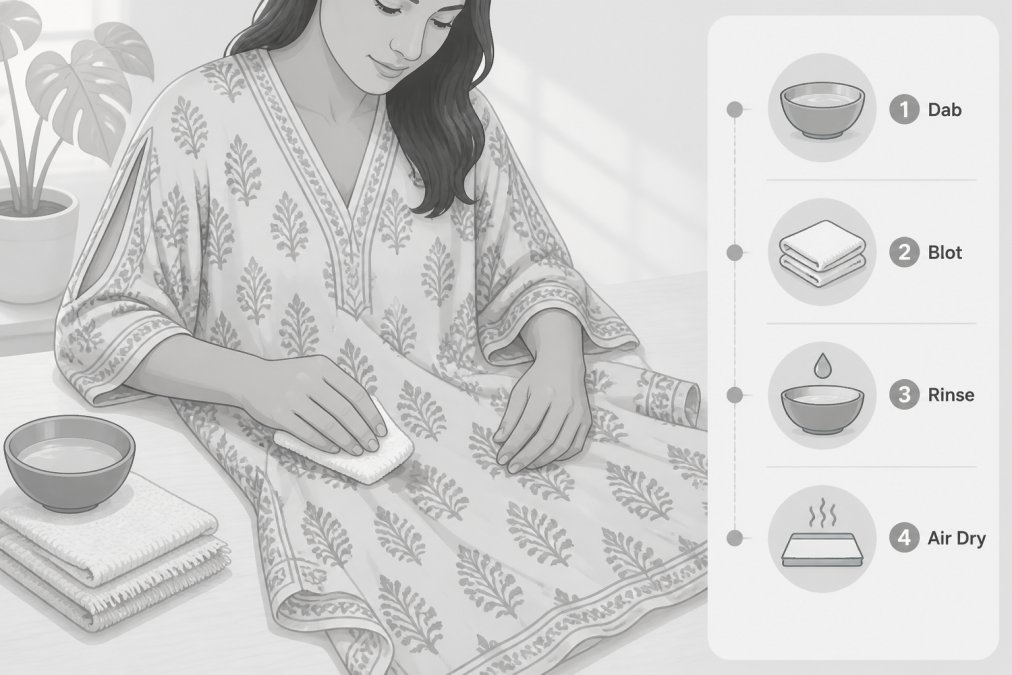
Act quickly. Fresh stains are always easier to treat than set ones. Blot, never rub.
Step-by-step stain treatment:
- Blot excess liquid immediately with a clean, dry white cloth using a pressing motion.
- Apply a small amount of mild soap directly to the stain. Work it in gently with your fingertip using circular motions.
- Let it sit for two to three minutes. Do not let the soap dry on the fabric.
- Rinse with cold water from the reverse side of the fabric.
- Check before drying. Heat sets stains permanently. If visible after rinsing, repeat before air drying.
For specific stain types:
- Food and oil stains: Sprinkle cornstarch or arrowroot powder on the stain. Let it absorb for 10 minutes, then brush away gently before applying mild soap.
- Ink or dye transfer: Cold water and mild soap applied immediately. A short soak in cold water with a splash of white vinegar can help lift transferred dye.
- Sweat and deodorant: Rinse with cold water immediately. Avoid enzyme detergents.
Test any stain treatment on an inconspicuous area first, particularly on pieces with deep indigo or red plant-based dyes. According to the Smithsonian's textile conservation guidelines, gentle blotting and cold water rinsing are the safest first responses for any stain on natural-dye textiles.

The pieces worth protecting deserve a care routine worth following. Lotus Temple Collection's hand block-printed kaftans, sarongs, and tunics are made to last with the right handling. The Hand Block Print Sarong in 100% cotton voile and the Mosaic Block Print Navy Kaftan are both designed for travel and repeated wear. Treat them gently, wash them cold, and they will hold their color and character for years.
Frequently Asked Questions
Can you machine wash block printed cotton?
Machine washing is possible on a gentle or delicate cycle using cold water, but hand washing is always safer for block print fabric. The agitation of a standard machine cycle can loosen natural dyes and cause color bleeding, especially in the first few washes. If you do use a machine, place the garment in a mesh laundry bag, select the coldest setting, and skip the spin cycle. Air dry flat in the shade immediately after.
How do you prevent block print fabric from fading?
Protecting colorfastness in hand block-printed textiles comes down to three habits: always wash in cold or lukewarm water, use a pH-neutral or enzyme-free detergent, and never dry in direct sunlight. Avoid soaking longer than 10 minutes, skip bleach entirely, and wash the piece separately for the first two or three washes. Storing folded away from light also slows fading between wears.
Does block printing ink stay on fabric after washing?
Hand-block printing uses natural or plant-based dyes that bond with the fabric fibers during an ink-setting process. With correct care, the print holds well through many washes. Some minor softening of color is normal over time and is part of the organic character of the textile. Harsh detergents, hot water, and rubbing are the main causes of premature ink loss, so gentle handling is the single biggest factor in longevity.
What is the best detergent for hand-printed textiles?
A pH-neutral, non-biological, enzyme-free detergent is the safest choice for hand-printed textiles. Enzyme-based formulas break down organic matter, which can include the natural dyes used in hand-block printing. Mild soap or a detergent labeled for delicates works well. Avoid any product containing bleach, optical brighteners, or fabric softeners with silicone, as these alter both the color and the hand feel of cotton and linen block print fabrics.
This article was written using GrandRanker