

How to Verify Sustainable Clothing Certifications
Table of Contents
- Why Verifying Sustainable Clothing Certifications Matters
- List of Credible Sustainable Fashion Certifications to Know
- How to Spot Greenwashing vs. Real Certified Claims
- GOTS Certification Lookup and Verification Steps
Last Updated: August 23, 2026
Why Verifying Sustainable Clothing Certifications Matters
When shopping for sustainable clothing, brands' claims can sound compelling but lack third-party verification. Learning to verify certifications protects you from greenwashing and ensures your money supports practices you care about. Certification from a recognized body means an external auditor has checked the supply chain, tested materials, and verified compliance with specific standards, creating accountability.
At Lotus Temple Collection, we understand why this matters. Below, we'll show you how to verify sustainable clothing certifications using public databases, recognize red flags, and distinguish genuine claims from greenwashing.

List of Credible Sustainable Fashion Certifications to Know
The most trustworthy certifications come from independent organizations that conduct third-party verification through audits and compliance monitoring.
GOTS (Global Organic Textile Standard) requires organic material content of at least 95%, restricts chemical use, and verifies fair labor practices through independent inspection (global-standard.org).
Fair Trade Certified focuses on ethical labor standards and fair compensation, tracking the supply chain to ensure workers receive livable wages and safe conditions (fairtrade.net).
OEKO-TEX Standard 100 tests finished products for harmful substances, guaranteeing textiles are free of regulated chemicals and safe for skin contact (oeko-tex.com).
Bluesign certifies textile manufacturers using safe chemicals and sustainable production methods, preventing pollution and protecting workers and the environment.
Cradle to Cradle evaluates material health, material reutilization, renewable energy, water stewardship, and social responsibility across the entire product lifecycle.
Each certification body maintains a public database where you can verify a brand's license number and scope certificate.
How to Spot Greenwashing vs. Real Certified Claims
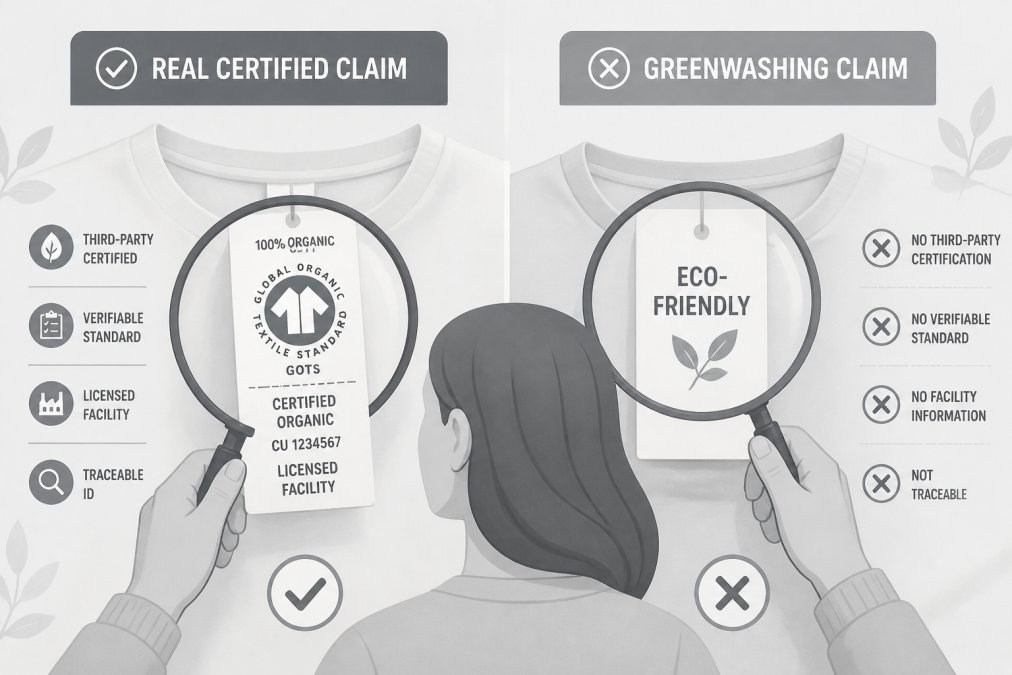
Greenwashing uses vague language, unverifiable claims, or misleading imagery to appear more sustainable than reality. Real certified claims come with specific proof.
Vague language is the first red flag. Phrases like "eco-friendly," "natural," or "sustainable" have no legal definition and require no verification. Compare these to "GOTS Certified" or "Fair Trade Verified", specific claims backed by independent assessment.
Look for the certification body name, not just a logo. Legitimate certifications include the certifying organization's name and are verifiable in their public database.
Check the scope certificate. Real certifications specify which products are certified, what standards they meet, and expiration dates. If a brand claims certification but can't provide a scope certificate number, the claim is unverified.
Examine supply chain transparency. Brands with genuine certifications explain manufacturing practices, name factories, and discuss material sourcing. Vague answers suggest unverified claims.
Test the hierarchy of trust. Third-party verification is more trustworthy than first-party claims. Public databases add another layer, if a claim appears in an official registry, it's been formally verified.
GOTS Certification Lookup and Verification Steps
GOTS certification lookup is the most practical way to verify organic cotton claims while shopping.

Step 1: Find the license number. Look at the product tag or brand website for a GOTS license number, typically formatted as "CU[numbers]." Without it, the claim isn't verifiable.
Step 2: Visit the official GOTS directory. Search the Global Organic Textile Standard's public database by brand name or license number. If it doesn't appear here, the certification doesn't exist.
Step 3: Check the scope certificate. The database shows which products are certified and whether they meet the 95% organic material threshold.
Step 4: Verify the certification is current. The database shows certification and expiration dates.
For Lotus Temple Collection items like our Stretch Pant Cropped Bootcut Legging, made with organic cotton from Fair Trade factories, you can verify organic content and fair trade practices through these databases. Transparency builds trust that vague marketing never can.

Frequently Asked Questions
How can I verify if a clothing brand is actually GOTS certified?
Check the Global Organic Textile Standard (GOTS) official database at www.gots.org. Search by brand name or license number, which appears on authentic product labels. Third-party verification ensures the claim is legitimate. Lotus Temple Collection uses organic cotton in many pieces, like our Handloom Shawl and Organic Cotton Indigo Lotus Flower Kaftan, with transparent sourcing practices.
What's the difference between third-party certifications and brand self-claims?
Third-party certifications come from independent organizations that audit and verify claims through on-site inspections and supply chain transparency. Brand self-claims lack external validation and are often greenwashing. Look for certifications from established bodies like GOTS, OEKO-TEX, and Fair Trade. These require compliance monitoring, scope certificates, and public audit trails, not just marketing language.
Are there online databases to check a brand's certification status?
Yes. GOTS maintains a searchable directory at www.gots.org. OEKO-TEX has a database at www.oeko-tex.com. Fair Trade USA operates www.fairtradecertified.org. These public databases let you verify license numbers and manufacturing practices directly. Always cross-reference multiple sources to confirm ethical labor standards and sustainable production claims before purchasing.
Choosing sustainable clothing means doing the work to verify claims. Public databases, scope certificates, and license numbers are your tools for cutting through greenwashing. When you can trace a garment's certifications back to independent auditors and official registries, you know your purchase actually supports the values you care about. Start with GOTS certification lookup for organic claims, then expand to Fair Trade and other standards relevant to what matters most to you.
This article was written using GrandRanker