


How to Pack Kaftans for Travel: No Wrinkles
Table of Contents
- How to Pack Kaftans for Travel: Roll, Fold, or Pouch?
- How to Prevent Wrinkles in Cotton Clothing During Transit
- Using Packing Cubes for Kaftans to Save Space
- Building a Versatile Travel Wardrobe Around Your Kaftans
Last Updated: August 17, 2026
How to Pack Kaftans for Travel: Roll, Fold, or Pouch?
Knowing how to pack kaftans for travel is the difference between arriving with a fresh statement piece and unpacking a crumpled mess. Kaftans are among the most travel-friendly garments you can own, their loose, unstructured silhouette recovers from packing far better than tailored pieces. Still, technique matters.
Rolling is the best default method for most kaftans. Lay the kaftan flat, smooth out surface creases, then roll from the hem upward toward the neckline. Keep the roll firm but not tight. This method compresses the garment without creating sharp fold lines, which cause deep-set wrinkles in cotton voile and lightweight fabrics.
Folding works for heavier kaftans with embroidery or beaded details, like the Long Kaftan Hand Embroidered Paisley Design. Fold along natural seam lines rather than across the print, and place acid-free tissue paper between folds to protect hand block-printed surfaces from friction damage.

Garment pouches are worth the investment if you're packing a single special-occasion kaftan. A dedicated pouch keeps the piece isolated, protects embellishments, and slides into carry-on luggage without shifting during transit.
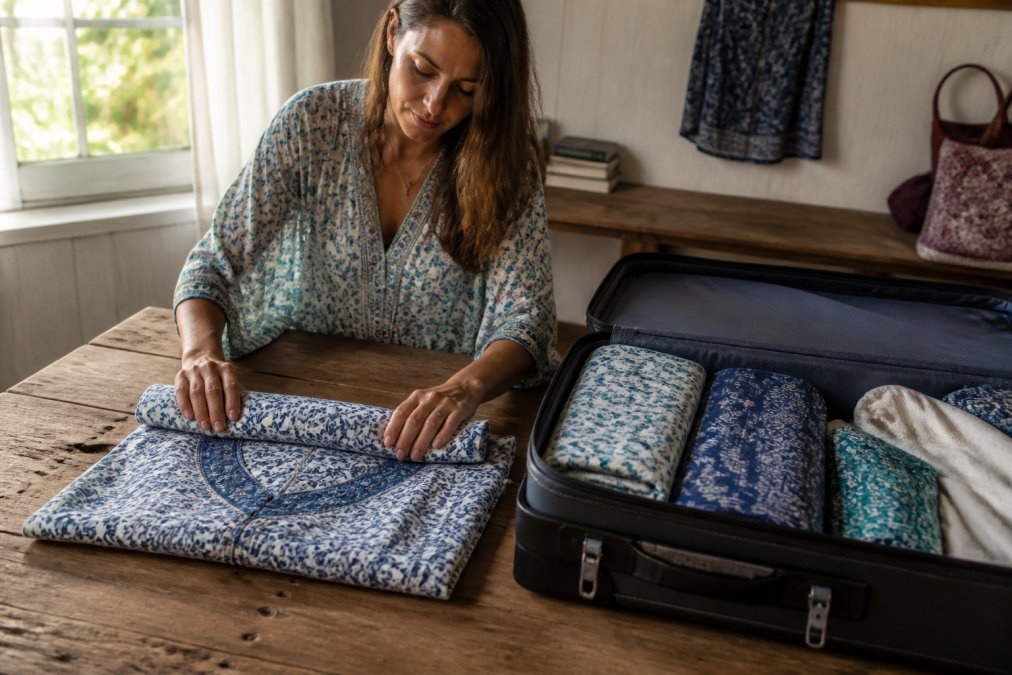
How to Prevent Wrinkles in Cotton Clothing During Transit
The biggest mistake travelers make is treating all cotton the same. Lightweight cotton voile, used in pieces like the Mosaic Block Print Navy Kaftan, is breathable and wrinkle-resistant compared to heavier weaves, recovering quickly when hung. Organic cotton, as noted by the Textile Exchange's fiber sourcing guidelines, retains its structure better over repeated packing cycles.

Wrinkle prevention methods that work:
- Pack kaftans last, on top of heavier items. Pressure from above sets wrinkles during transit.
- Don't overfill your bag. Leave 10-15% of space free to avoid compression.
- Use the bundle wrapping method: wrap lightweight kaftans around a central core of rolled socks or underwear to keep them taut.
- Avoid packing directly against hard suitcase walls. Line the sides with softer items first.
Post-arrival wrinkle removal without an iron:
- Steam from the shower: Hang the kaftan in the bathroom while running a hot shower for five minutes. Steam relaxes cotton fibers naturally.
- Damp towel press: Lay the kaftan flat on a bed, place a slightly damp towel on top, and press firmly with your hands.
- Hang overnight: For light creasing, simply hanging the kaftan on a hanger overnight in a warm room resolves most travel wrinkles by morning.
Using Packing Cubes for Kaftans to Save Space
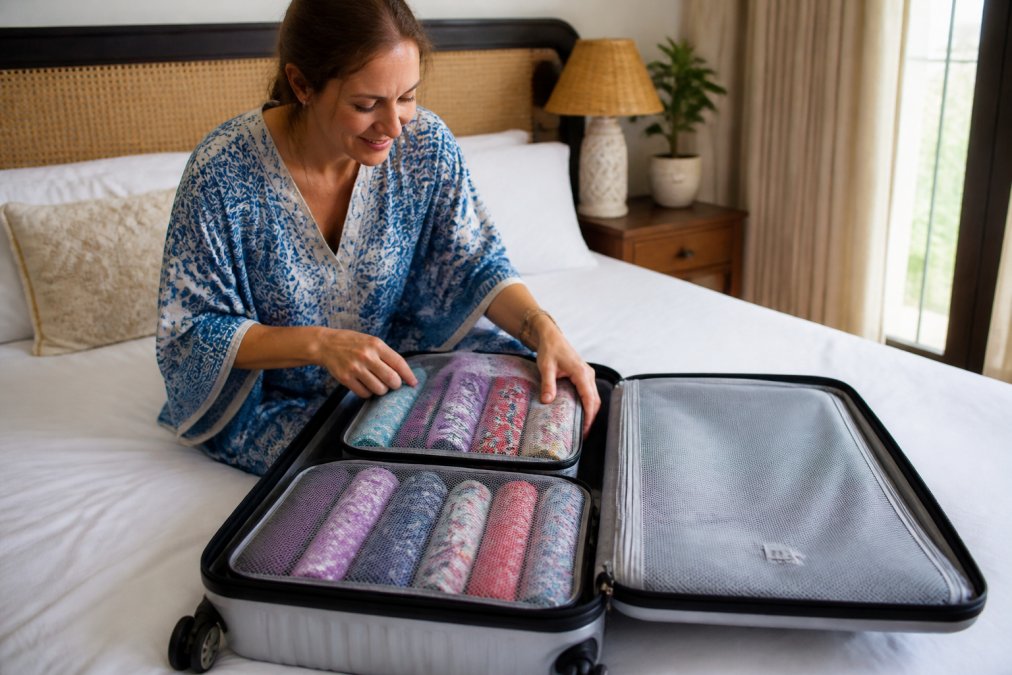
Packing cubes are one of the most effective space-saving tools for a travel wardrobe built around kaftans. For kaftans specifically, standard mesh packing cubes work better than compression cubes, which can create horizontal fold lines across printed fabric.
How to use packing cubes for kaftans:
- Roll each kaftan individually.
- Stand the rolls upright inside the cube, side by side, like files in a drawer. This "file folding" orientation lets you see every piece at a glance.
- Use one cube per category: one for kaftans and cover-ups, one for lighter layers, one for accessories.
- Place the kaftan cube flat on top of heavier items in your carry-on.
| Garment Type | Packing Method | Cube Type | Position in Bag |
|---|---|---|---|
| Lightweight voile kaftan | Roll tightly | Mesh cube | Top layer |
| Embroidered long kaftan | Fold with tissue | Garment pouch | Top layer |
| Cotton tunic | Roll loosely | Mesh cube | Mid layer |
| Accessories and scarves | Bundle or roll | Small mesh cube | Side pocket |
A single medium packing cube can hold two to three rolled kaftans comfortably, delivering maximum style impact per cubic inch of luggage. According to the TSA's carry-on size guidelines, packing kaftans efficiently makes it genuinely possible to travel a full week in carry-on only.
Building a Versatile Travel Wardrobe Around Your Kaftans
A kaftan's real value is its day-to-night versatility. A lightweight block-print kaftan functions as a beach cover-up in the morning, a casual lunch dress with sandals, and an evening statement piece with jewelry and heeled mules. That single garment replaces three separate outfits in your bag.

Building a capsule wardrobe around kaftans:
Start with a neutral palette base: one or two kaftans in deeper tones (navy, indigo, black) that pair with everything, plus one or two in bolder prints as statement pieces. The Organic 100% Cotton Indigo Lotus Flower Anokhi Hand Block Print Kaftan is a strong anchor piece, its indigo ground reads as neutral while the hand block print provides visual interest.
Layering for climate flexibility:
- In humid coastal climates, breathable cotton voile worn loose over a swimsuit wicks moisture and dries quickly.
- For cooler evenings, a lightweight linen or cotton kimono jacket over a kaftan adds warmth without bulk.
- For more conservative destinations, layer a kaftan over fitted trousers for coverage that reads as polished resort wear.
Choosing the right fabric for your destination:
- Hot and humid climates: Cotton voile and open-weave cotton. Avoid synthetic blends, which trap heat.
- Dry heat destinations: Slightly heavier cotton or cotton-silk blends hold their shape better in low-humidity environments.
- Temperate beach destinations: Layerable cotton pieces that transition from warm days to cool evenings.
The boho aesthetic of hand block-printed kaftans means accessories do the heavy lifting for outfit coordination. A single kaftan styled with different sandals, jewelry, and a hat reads as three distinct looks. Pack accessories light, and let the print carry the outfit.
Frequently Asked Questions
Is it better to roll or fold kaftans for travel?
Rolling works best for lightweight 100% cotton and cotton voile kaftans because it compresses fabric without creating sharp creases. Flat folding with acid-free tissue is better for hand-embroidered pieces where you want to protect raised details. For most travel kaftans, rolling and placing them in a garment pouch or packing cube keeps them wrinkle-free and easy to unpack.
How do you remove wrinkles from a kaftan after unpacking?
Hang your kaftan in the bathroom while you run a hot shower. The steam relaxes cotton fibers within 10 to 15 minutes without any iron contact. For faster results, lightly mist the fabric with water and smooth it by hand, then hang to air dry. Breathable materials like organic cotton voile respond well to both methods and are usually wrinkle-free within 20 minutes.
Can you pack kaftans in a carry-on without taking up too much space?
Yes. A rolled 100% cotton voile kaftan compresses to roughly the size of a water bottle. Using packing cubes for kaftans keeps them contained and lets you fit two or three full-length styles in a standard carry-on alongside other travel essentials. Lightweight fabrics like cotton voile are specifically worth choosing for carry-on travel because they weigh very little and pack flat.
What is the best way to pack delicate cotton clothing?
Place hand-embroidered or hand block-printed pieces face-down on a flat surface, lay a sheet of acid-free tissue over the design, then fold or roll gently. Store inside a garment pouch or a dedicated packing cube to prevent friction against other items. Avoid overpacking the bag, which forces fabric into sharp folds. Cotton breathes well, so a loosely packed cube also reduces odor buildup during longer trips.
Packing light without sacrificing style is a real challenge for resort travel. The Lotus Temple Collection range of hand block-printed, 100% organic cotton kaftans is designed specifically for travelers who want destination-ready pieces that pack small, arrive wrinkle-resistant, and work across every occasion from beach to dinner. Browse the collection and get started with pieces built for the way you actually travel.
This article was written using GrandRanker