


Does Cotton Keep You Cool in High Heat?
Table of Contents
- Does Cotton Keep You Cool in High Heat?
- Best Breathable Fabrics for Summer and How Cotton Compares
- Cotton vs Polyester for Hot Weather: What Actually Works
- Frequently Asked Questions
Last Updated: October 1, 2026
Does Cotton Keep You Cool in High Heat?
Cotton doesn't keep you cool in high heat the way most people assume. The fabric breathes well, but it absorbs moisture instead of wicking it away. When you sweat in cotton, the fabric holds that dampness against your skin, which actually traps heat rather than releasing it. This is the core tension: cotton feels breathable until humidity and perspiration enter the equation.
Performance depends on humidity, activity level, and weave. In dry climates, evaporative cooling works well; in humid environments or during activity, cotton's hydrophilic structure absorbs moisture and traps heat against skin.
Lotus Temple Collection crafts 100% cotton kaftans and tunics for warm climates.
Best Breathable Fabrics for Summer and How Cotton Compares
Breathability (air circulation) differs from moisture management (sweat transmission). Cotton breathes well but absorbs moisture; synthetics like polyester do the opposite.
Linen outperforms cotton with larger air pockets and faster drying, though it wrinkles more. Bamboo viscose offers moisture-wicking properties with a soft feel.
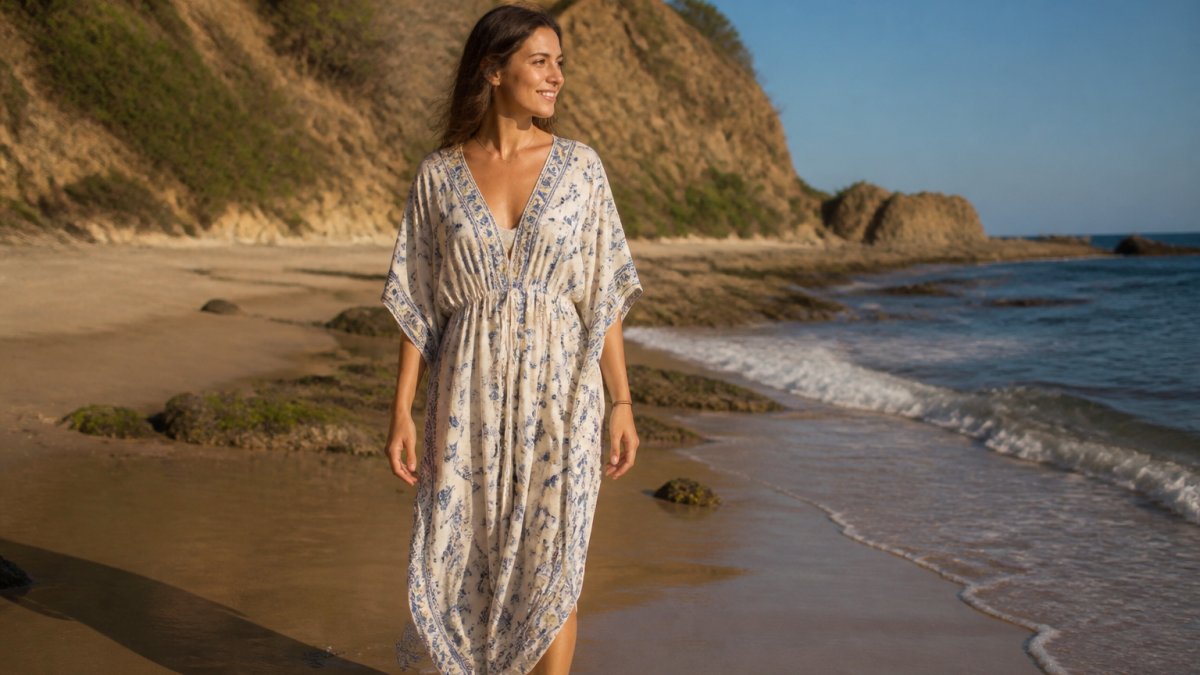
Lightweight voile weaves and loose, flowing silhouettes like kaftans improve airflow better than heavy fabrics or fitted pieces. Our Long Kaftan Hand Embroidered Paisley Design uses a relaxed cut that encourages airflow.
Long Kaftan Hand Embroidered Paisley Design →

Cotton vs Polyester for Hot Weather: What Actually Works
Polyester outperforms cotton in humid heat: its hydrophobic structure repels moisture, enabling faster drying and preventing the damp cling that makes cotton uncomfortable.
Cotton excels in dry heat where evaporative cooling works efficiently, offering superior softness and comfort for resort wear in arid climates.
Layer your wardrobe: choose synthetics for humid, active conditions and cotton for dry heat. The Mosaic Block Print Navy Kaftan in lightweight cotton voile maximizes performance for dry-climate resort wear.

Cotton does keep you cool in specific conditions, but high heat and humidity expose its limitations. For tropical vacations and beach resort wear where style matters as much as function, quality cotton construction makes all the difference. Lotus Temple Collection's hand block-printed kaftans and tunics use lightweight cotton voile. Explore our collection of artisan-crafted pieces designed for warm climates and discover how thoughtful fabric selection enhances comfort without sacrificing the aesthetic beauty that makes resort wear memorable.
Frequently Asked Questions
Is 100% cotton bad for hot weather?
Not entirely. Cotton breathes well and allows air circulation, which helps with evaporative cooling. However, it absorbs moisture rather than wicking sweat away, so in high humidity it can feel damp and cling to your skin. Cotton works best in dry heat or when you're not perspiring heavily. In humid conditions or during physical activity, synthetic fabrics designed for moisture-wicking perform better. The key is matching the fabric to your specific climate and activity level.
What are the benefits of organic cotton clothing in summer heat?
Organic cotton offers the same breathability and comfort as conventional cotton while being gentler on skin and better for the environment. Since it's grown without synthetic pesticides, it tends to feel softer and less irritating, especially important when wearing lightweight summer pieces directly against your skin.
Does cotton absorb sweat effectively in high humidity?
Cotton absorbs sweat very well, but that's not always an advantage in high humidity. While it pulls moisture away from your skin, it holds onto that moisture rather than releasing it quickly. In humid climates, this means the fabric stays damp longer, reducing evaporative cooling and making clothes feel heavy and clingy. Cotton's moisture saturation happens faster in humid conditions. For tropical vacations or humid environments, look for cotton pieces with looser weaves or consider layering strategies that allow better airflow and faster drying times.