


Cotton Kaftan Sizing Guide: Tips for Perfect Fit
Table of Contents
- How to Measure Your Body for a Cotton Kaftan
- Kaftan Length Guide: Finding Your Ideal Fit
- Kaftan Alterations Tips for Custom Fit
- How to Pack Kaftans for Travel
Last Updated: August 30, 2026
How to Measure Your Body for a Cotton Kaftan
Use a soft tape measure that conforms to your body's natural contours. Measure your bust at the fullest point across your chest, keeping the tape parallel to the ground and snug but not tight. For shoulder width, measure from the outer edge of one shoulder bone to the other. These two measurements are your foundation for choosing between sizes and understanding how a kaftan will drape on your frame.
Kaftans with narrow shoulders will pull across your back, while oversized shoulders create excess fabric that doesn't flatter. Even a half-inch difference can shift how a garment sits on your body.
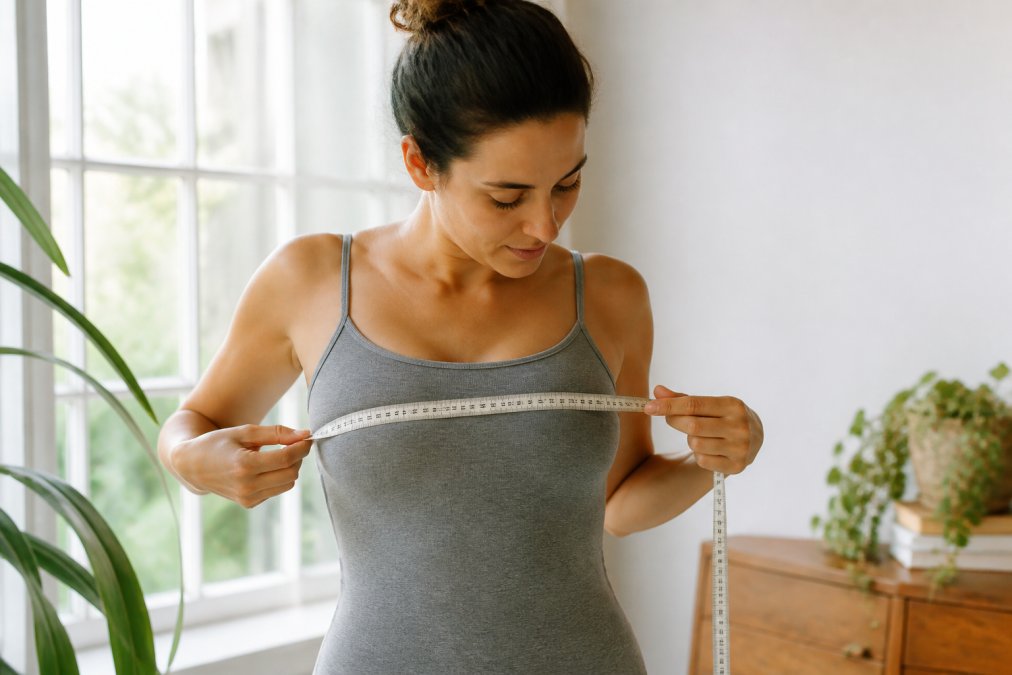
For the most accurate fit, measure while wearing the undergarments you'll typically wear under a kaftan. Write down your measurements and compare them against the size chart before ordering.
Kaftan Length Guide: Finding Your Ideal Fit
The ideal kaftan length depends on your height and personal style. Most kaftans fall between knee-length and ankle-length.
For petite frames under 5'4", a kaftan hitting mid-calf creates better proportions than one reaching your ankles. Standard maxi length works beautifully for average heights around 5'5" to 5'9", where the hemline lands just above or at your ankles. Taller women often need to size up or look for extended-length options.
The shoulder-to-hem measurement is your most reliable guide. Measure from your shoulder bone down to where you want the kaftan to end, then compare that number to the garment's stated length.
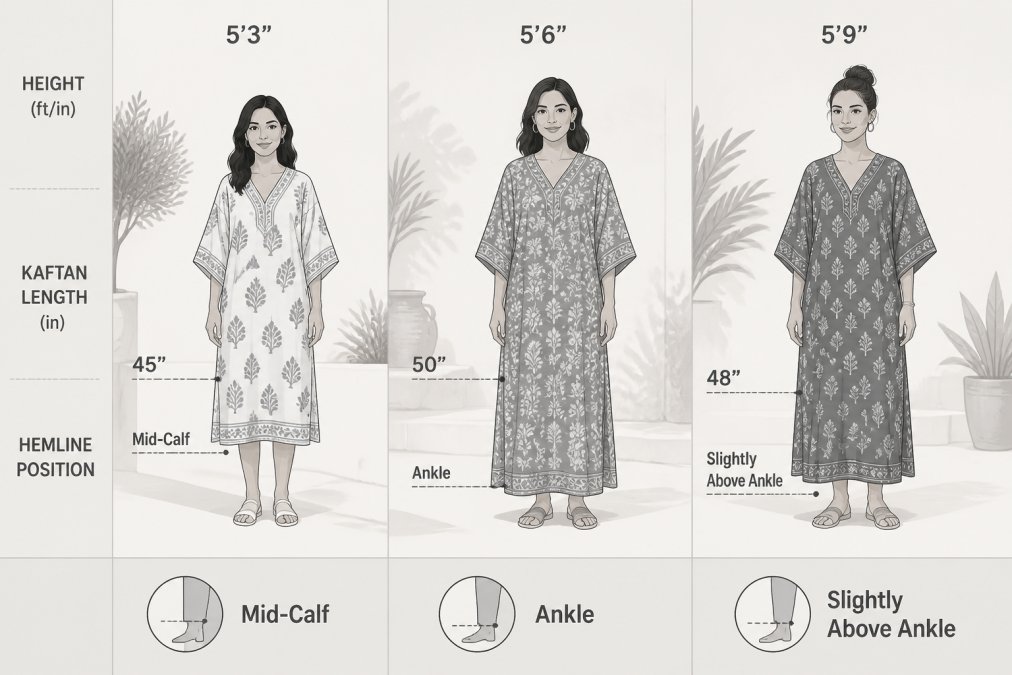
Keep in mind that 100% cotton voile can shift slightly with wear and washing. A kaftan that hits exactly at your ankle may creep up a quarter-inch after several wears.
Kaftan Alterations Tips for Custom Fit
Hemming is the most common alteration for kaftans. A tailor can adjust the hemline while preserving the original hem finish, which maintains the garment's integrity and drape.
For a relaxed-fit kaftan, a small adjustment of half an inch to an inch on each side can transform a loose silhouette into something that skims your body without clinging. Work with a tailor who understands how lightweight cotton behaves.
The drawstring waist found on many kaftans offers built-in fit flexibility. Tighten it to define your natural waist, or leave it loose for a more flowing silhouette. This simple adjustment eliminates the need for costly alterations in many cases. According to textile care guidelines from the American Textile Manufacturers Institute, proper garment construction allows for adjustable fit features that extend a garment's wearability across different body types.
How to Pack Kaftans for Travel
Kaftans pack beautifully because of their relaxed structure and lightweight fabric. Roll them rather than fold them to minimize creasing, lay the kaftan flat, then roll it tightly from one end to the other.
For a week-long trip, two or three kaftans in complementary prints give you outfit variety without excessive luggage weight. Hand block-printed pieces often feature designs that coordinate easily. Pair them with a lightweight scarf or belt to shift the look between days.
Cotton kaftans work as both resort wear and casual home clothing. Wear one on travel days to save luggage room, then pack the others flat. When you arrive, hang your kaftans in the bathroom while you shower, the steam from hot water releases wrinkles naturally without needing an iron.
Finding the perfect cotton kaftan fit transforms how you feel in warm weather. At Lotus Temple Collection, we design our hand block-printed kaftans with comfort and versatility in mind, offering pieces like The "Skinny" Kaftan for petite frames and our Short block-print Kaftan with drawstring for everyday wear. Each piece is crafted from 100% cotton voile with adjustable details that adapt to your body. Take your measurements, compare them to our sizing guide, and choose a kaftan that makes you feel confident whether you're heading to the beach or settling in at home.


Frequently Asked Questions
Q: Do cotton kaftans shrink after washing?
A: Yes, 100% cotton kaftans can shrink 3-5% after the first wash, especially if exposed to hot water or high heat drying. To minimize shrinkage, wash in cool water and air-dry flat or hang-dry. Many customers find that pre-washing before wearing helps set the fabric. Check the care tag on your specific kaftan for manufacturer guidance, as hand block-printed cotton pieces may have special instructions to preserve the print quality.
Q: What size cotton kaftan should I get if I'm between sizes?
A: Cotton kaftans are designed with relaxed fit and generous silhouette, so sizing down is often recommended if you're between sizes. A slightly looser fit allows for comfortable movement and layering, while still maintaining the flattering drape that makes kaftans versatile for different body types. Refer to the specific kaftan's measurement chart on the product page, and compare your bust and shoulder-to-hem measurements to the listed dimensions rather than relying on standard sizing alone.
Q: How should a kaftan fit on the shoulders?
A: A well-fitting kaftan should sit comfortably on or slightly off the shoulders, with enough circumference that the fabric drapes without pulling. The shoulder seam should align close to your natural shoulder point. Because kaftans have an oversized, flowy silhouette by design, they intentionally sit loose through the chest and waist. If the shoulders feel tight or restrictive, size up. The adjustable belt or drawstring waist allows you to define your natural waist without the garment clinging to your body.
This article was written using GrandRanker